What distance costs Mauritania. The same bag of rice, the same litre of oil — but not the same price.
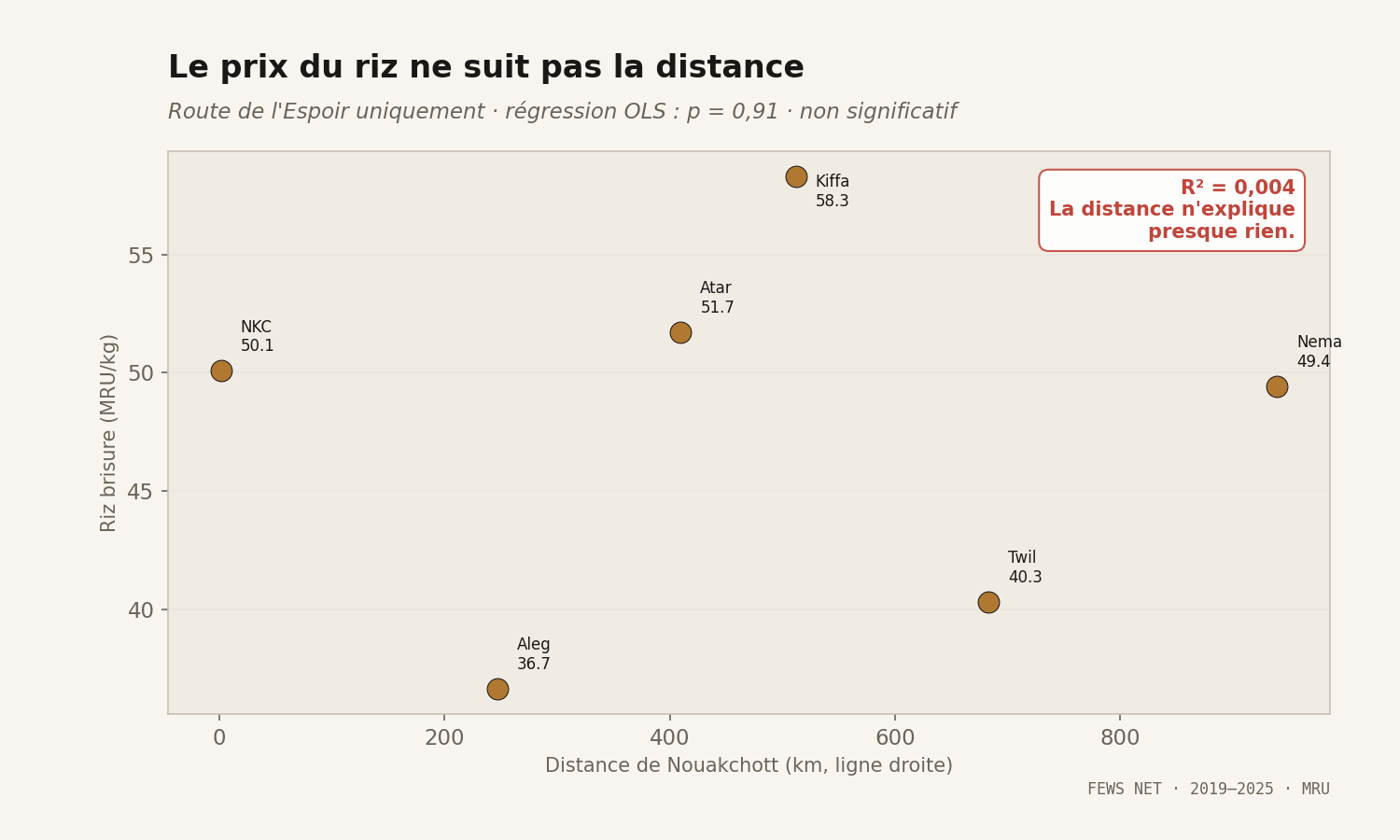
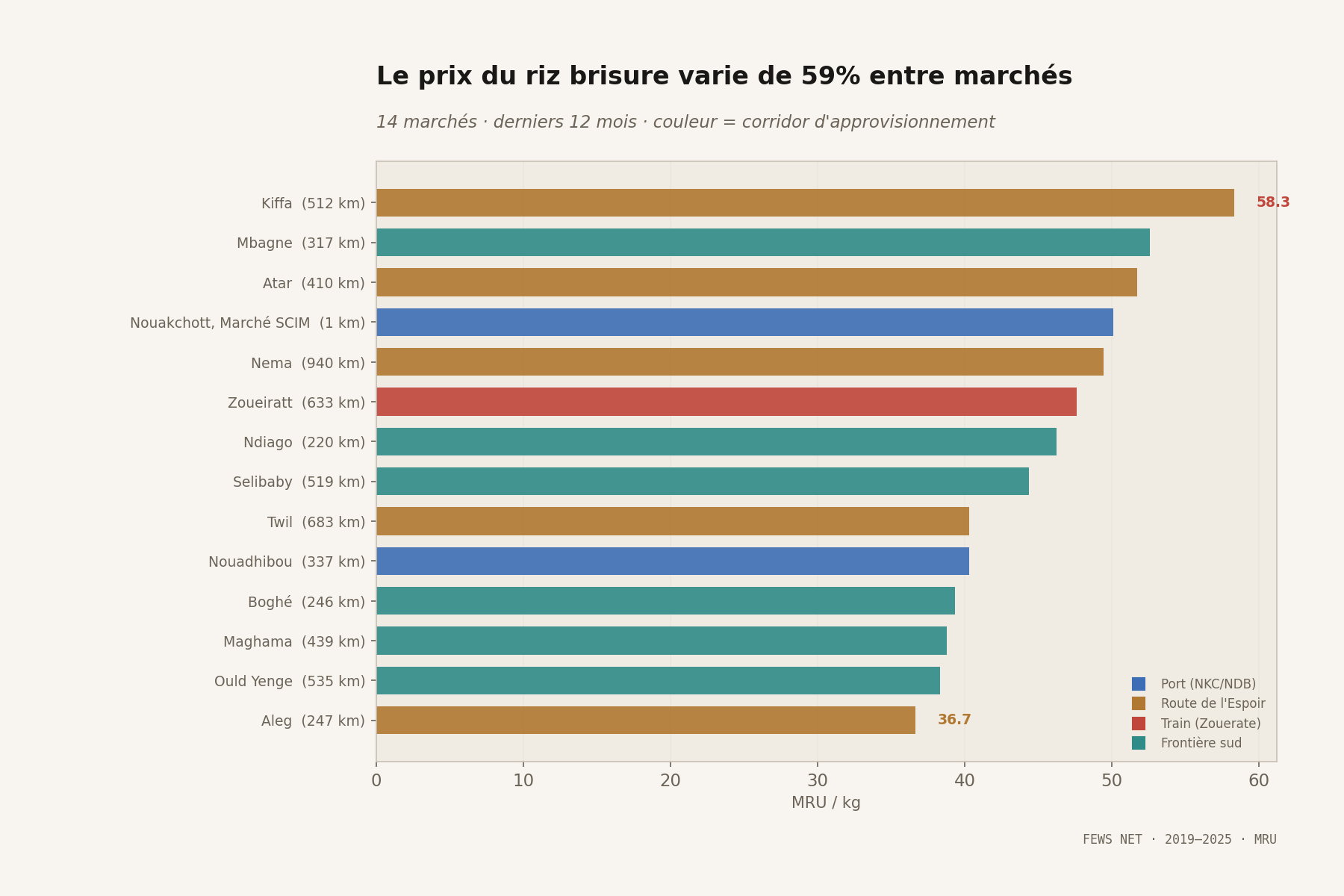
Explore the data →We assume farther from port means higher price. The regression says: R² = 0.004. Aleg at 247 km is cheapest. Kiffa at 512 km is most expensive. Nema at 940 km drops back down.
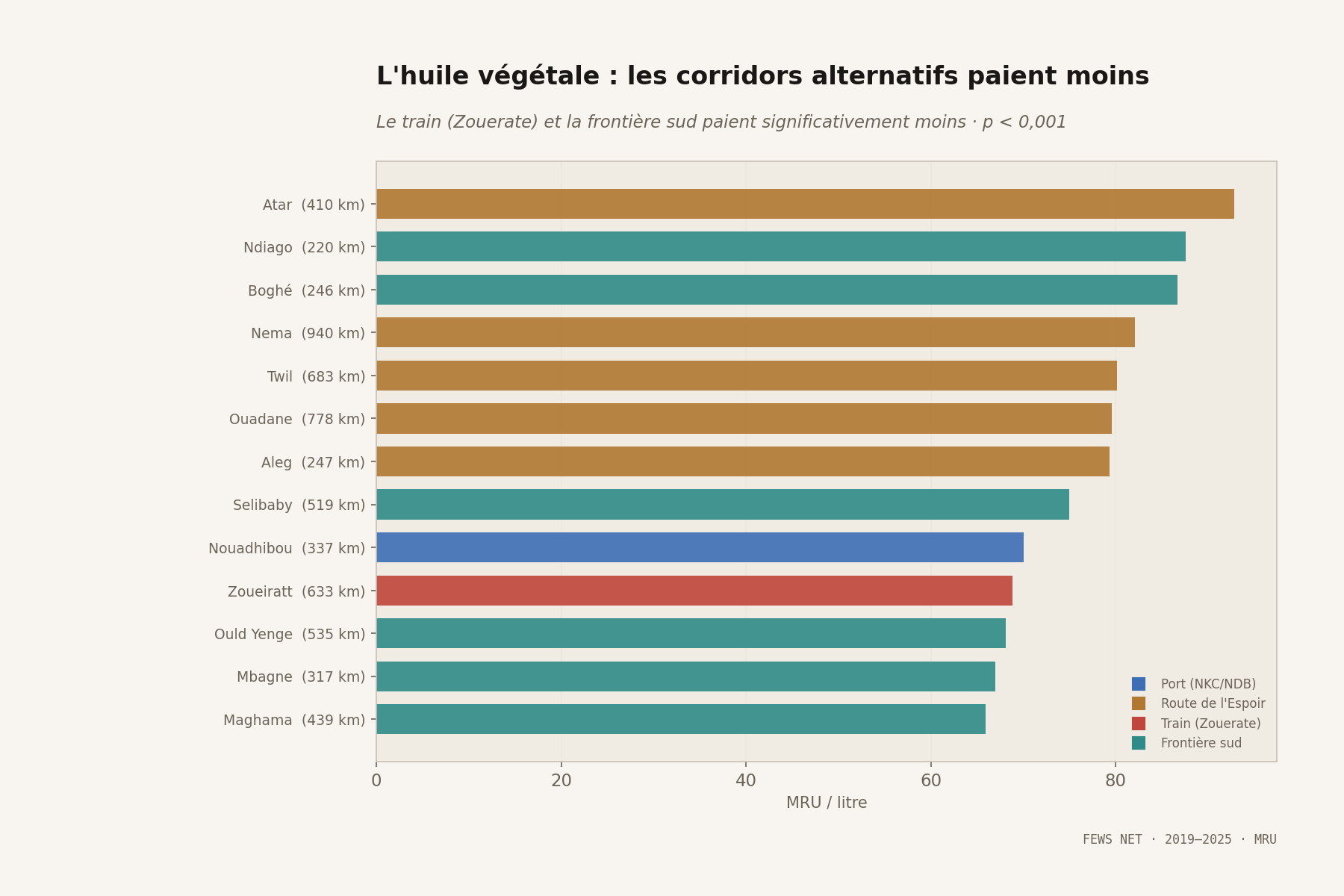
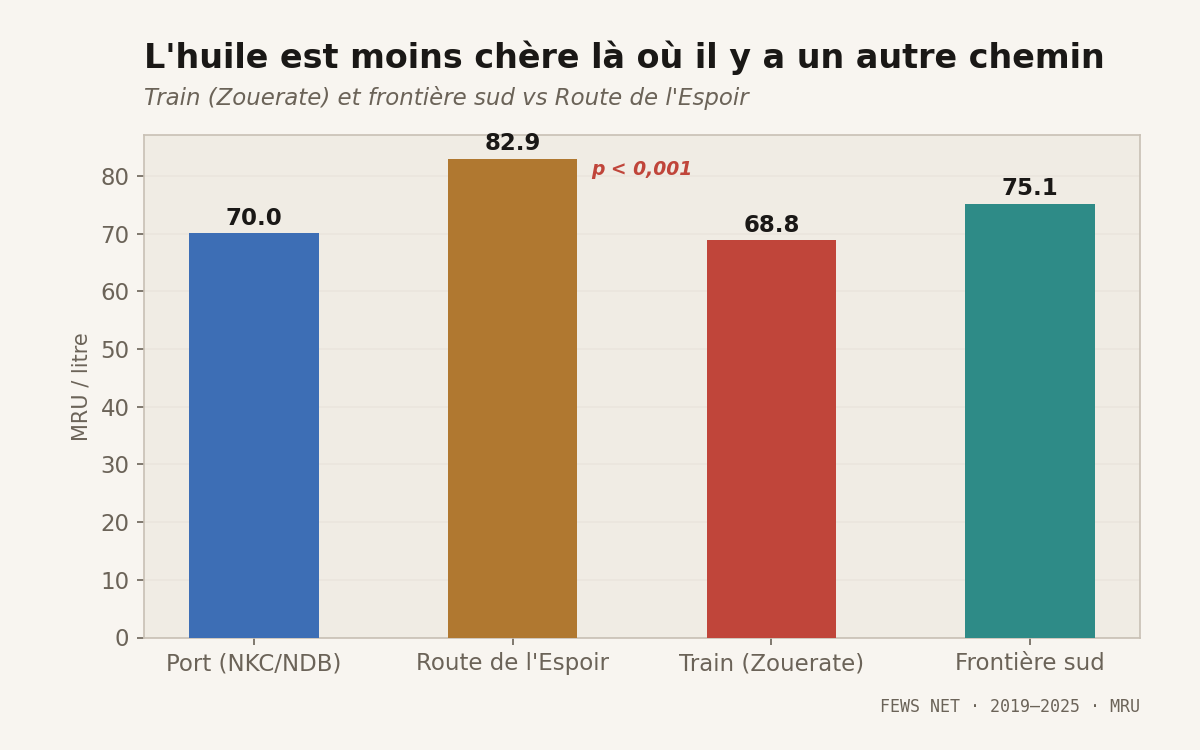
The iron ore train delivers oil 15 MRU cheaper than the road. The Senegalese border does too. Mauritania does not have one supply chain — it has three.
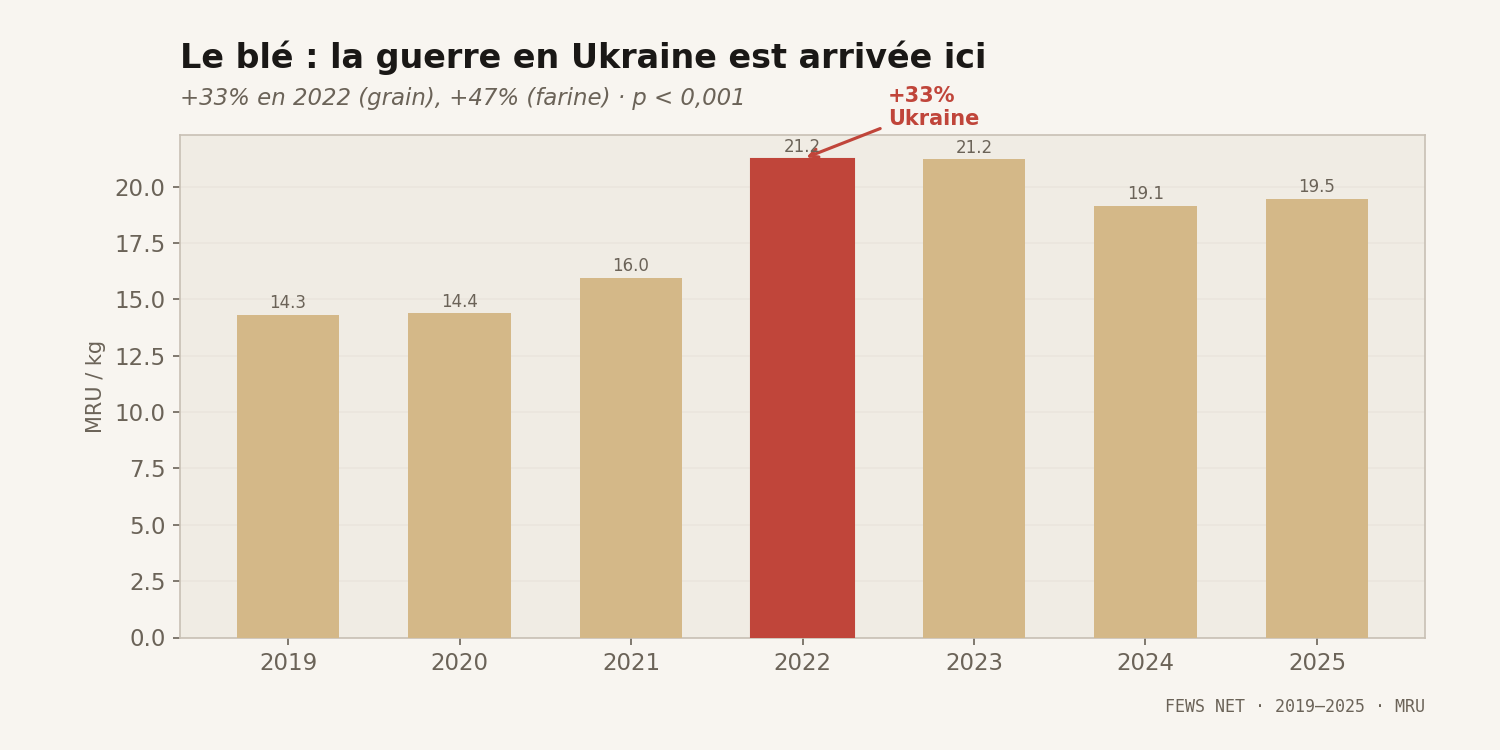
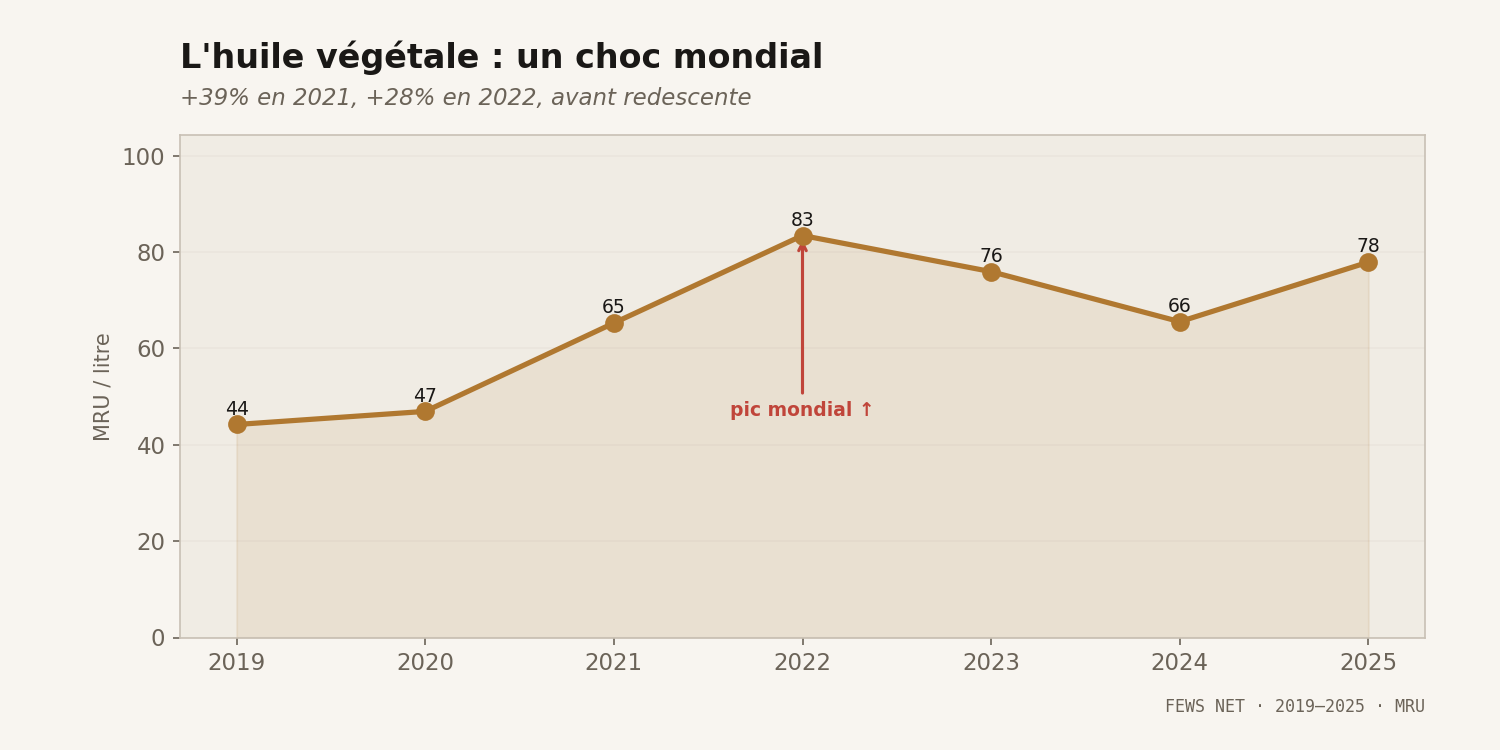
Wheat grain: +33% between 2021 and 2022. Flour: +47%. Vegetable oil: a global shock even more brutal, starting before the war.
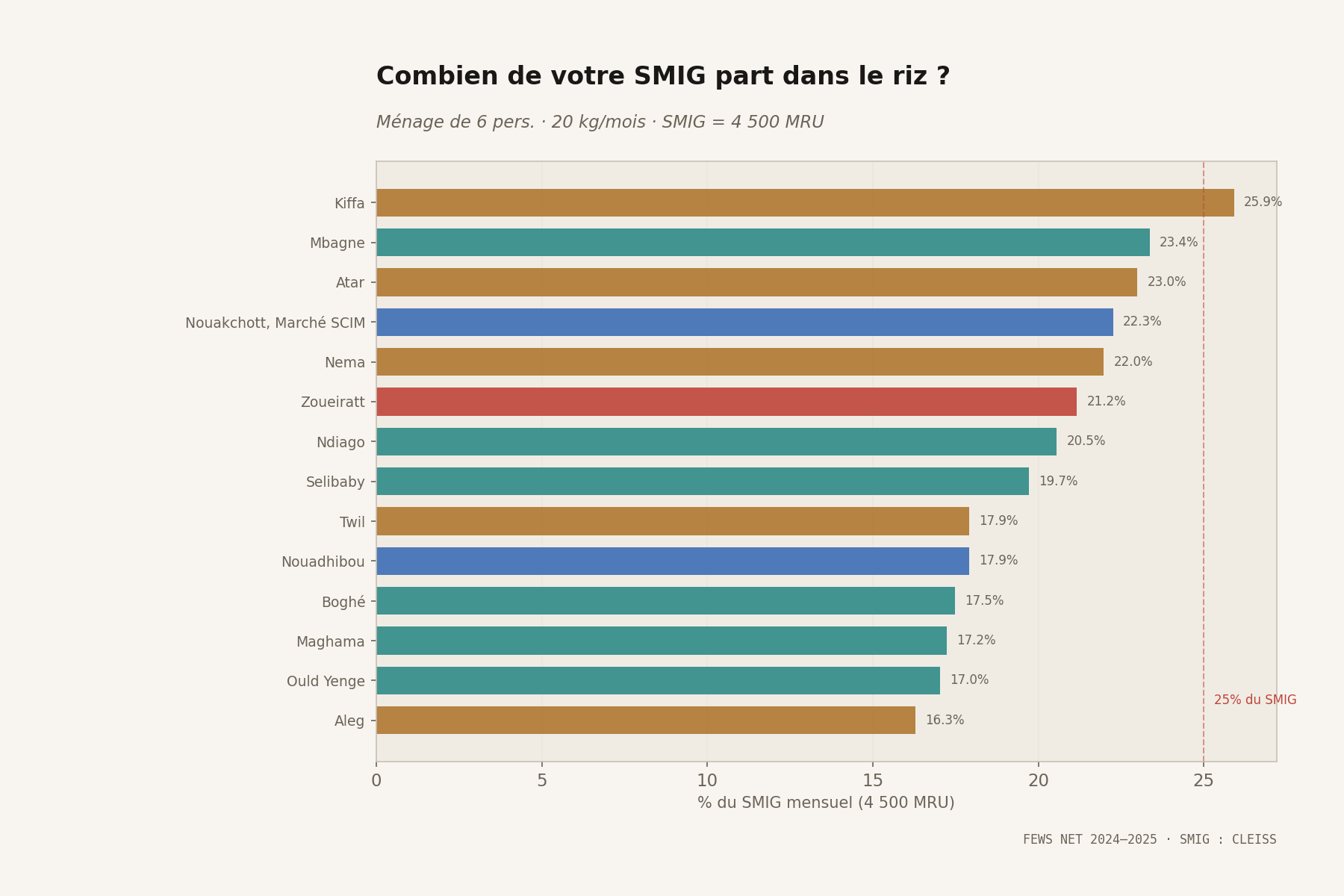
In Kiffa, a family on minimum wage spends 1.2 months more salary per year on rice than in Aleg. Twelve years of minimum wage frozen at 3,000 MRU.
Sugar disappeared from the data in 2018. Ramadan does not move imported rice prices (p = 0.96). But it hits local products.
FEWS NET. No modeling. OLS and Welch's t-tests. 3,170 observations, 23 markets, 2019–2025.
14 markets, last 12 months. Each bar is colored by supply corridor. Kiffa pays 59% more than Aleg — on the same road.
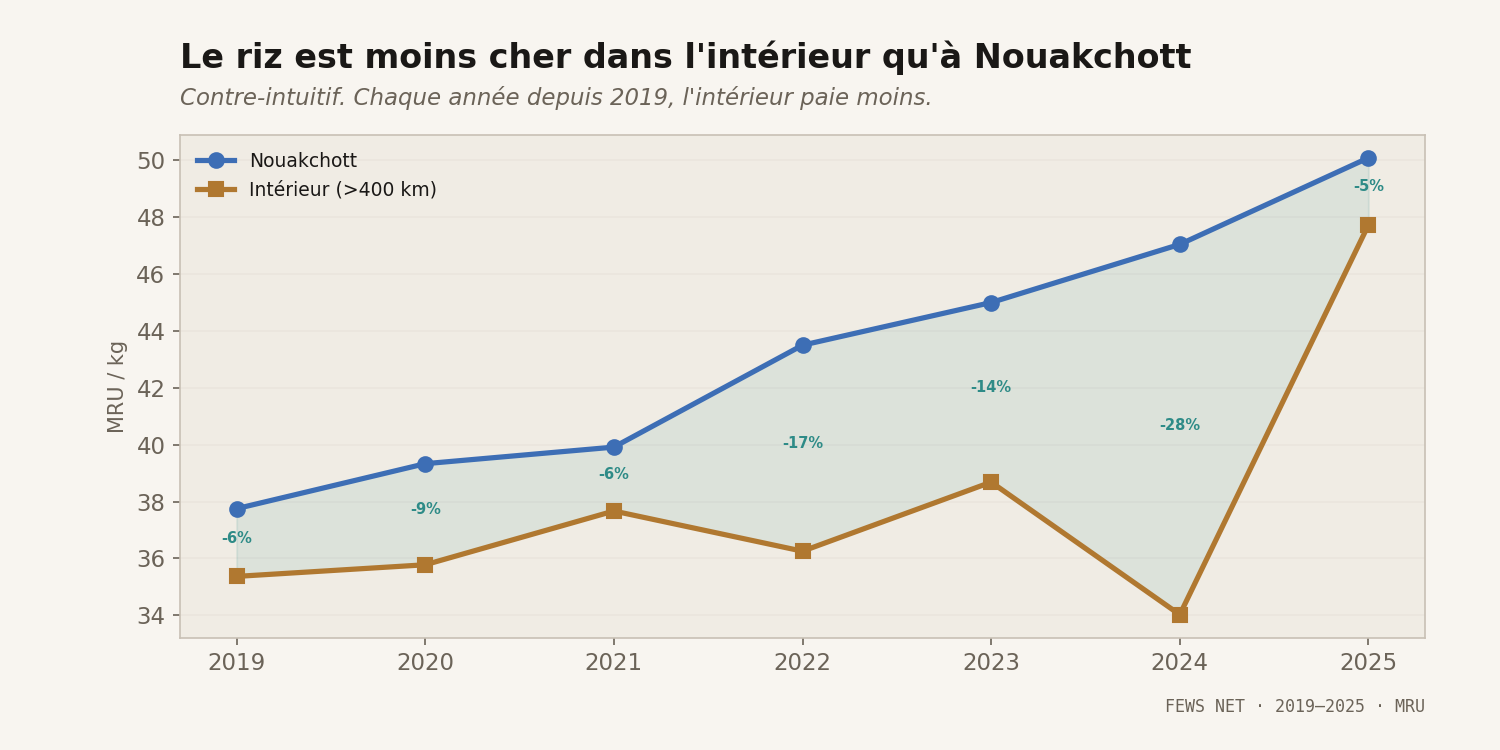
Nouakchott is not the cheapest market. Nouadhibou, Ould Yengé and Aleg all pay less.
R² = 0.004 · p = 0.91 · not significant
Mauritania does not have one supply chain. It has three.
1,100 km. Four days by truck. 16 markets. The main corridor.
704 km by rail. Traders load empty return wagons.
Bidirectional cross-border trade. Bridge under construction at Rosso.
Eight analyses, all from FEWS NET data 2019–2025.
The AI assistant knows all the data: the 23 markets, the 3,170 observations, the p-values, the corridors. Ask it anything about prices, methodology, or findings.
A family on minimum wage in Kiffa spends 1.2 months more salary per year on rice than a family in Aleg. That is the price of sand.